
Our company was established in 2012 and is a national high-tech enterprise. We mainly take charge of R&D, production, sales, and service of LED drivers. We have over 1000 clients worldwide and over 3 million output every year. Our products have been sold worldwide, such as in Thailand and USA.
Custom Service
We can customize the lamp structure, required functions, parameters, etc. Also, we provide OEM&ODM services and a one-stop solution including a full design, manufacturing, and after-sales.
Complete Certification
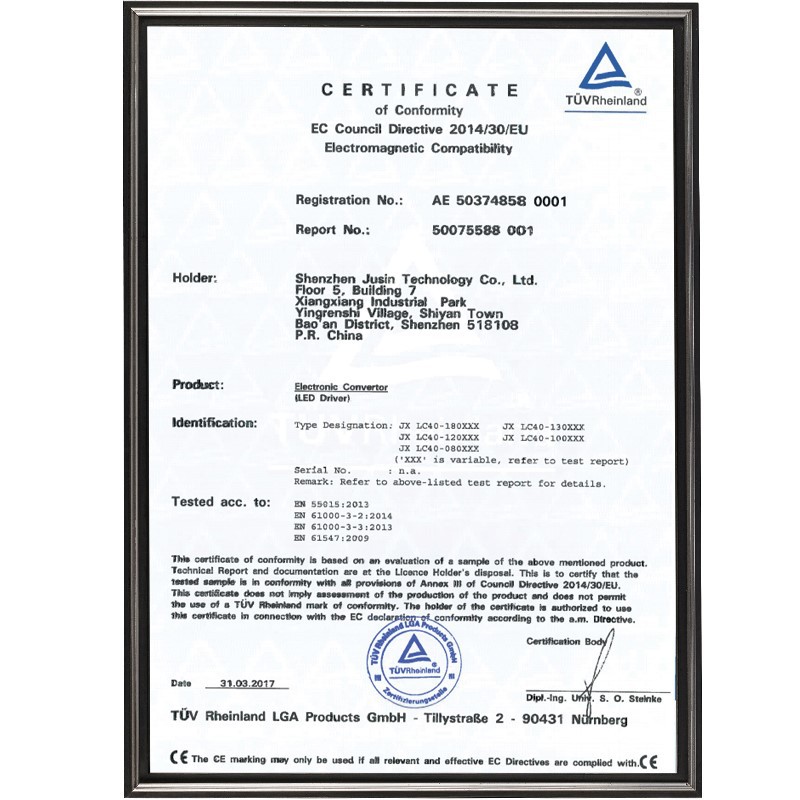
The company has passed the "ISO9001:2015" quality management system certification as well as the certificate of national high-tech enterprise. The products are compatible with multi-national certifications, including China CQC certification and international UL, CUL, TUV, ROHS, CE, CB, SAA, FCC, CCC, etc.
Strong Production Ability
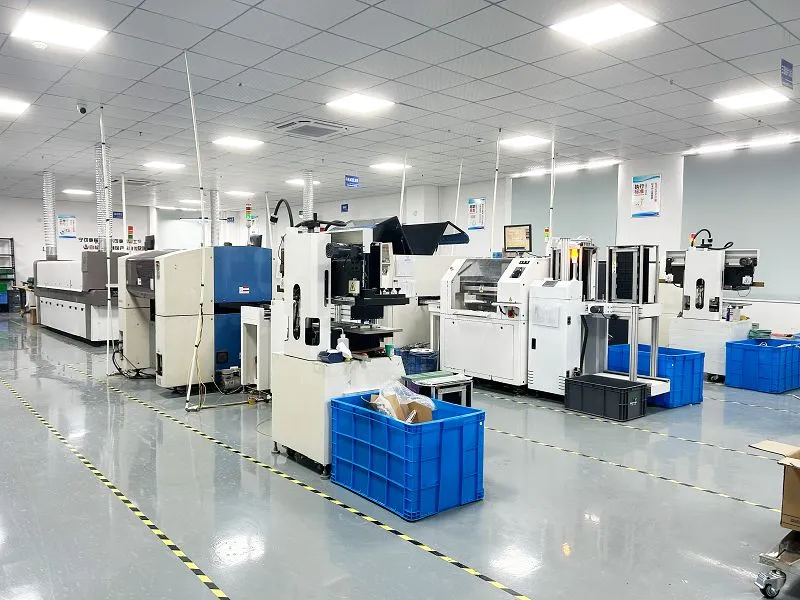
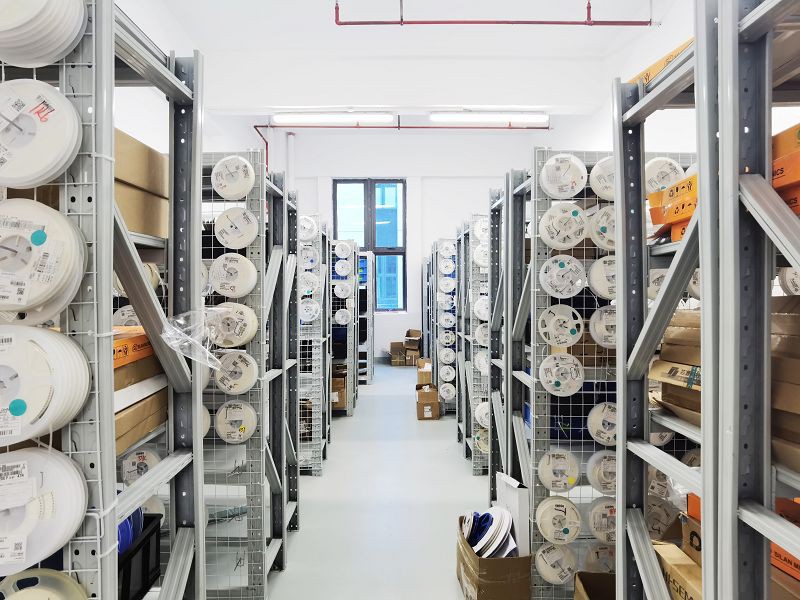
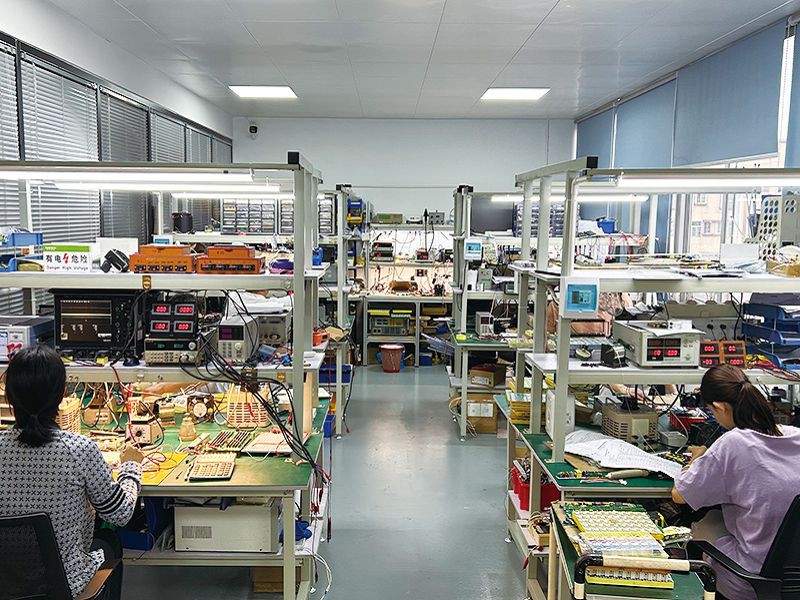
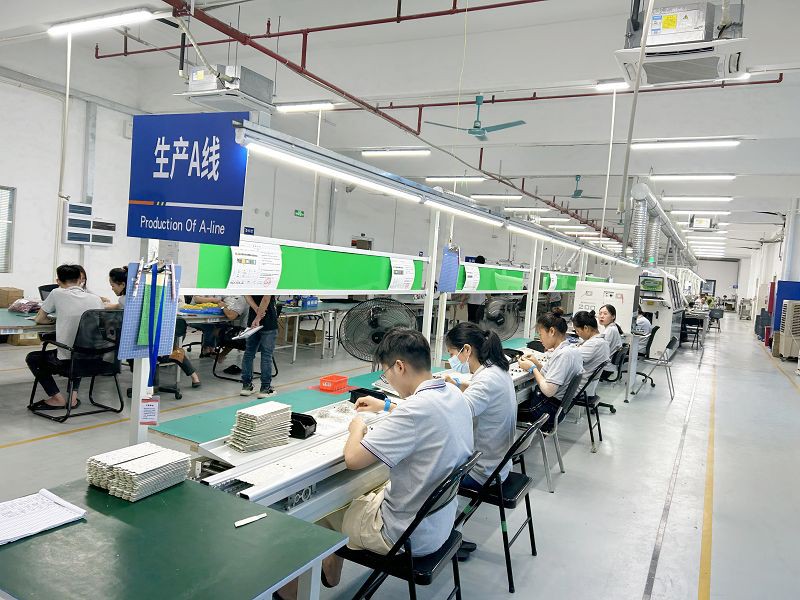
With a 4000 square meters factory in Foshan high-tech Zone, the company has 3 patch production lines and 3 plug-in production lines. There are around 100 employees and the annual capacity reaches 5 million shipments. Not only does the company have a professional R&D team of about 20 people, but also has advanced equipment to support such as SMT machines, automatic gluing machines, aged vehicles, reflow solder, and so on.
Professional Team
Most of the R&D team has 10 years of experience in the LED lighting industry. The team covers professionals from multiple fields including electronic engineering, optical design, and lighting engineering, providing comprehensive technical support to customers.
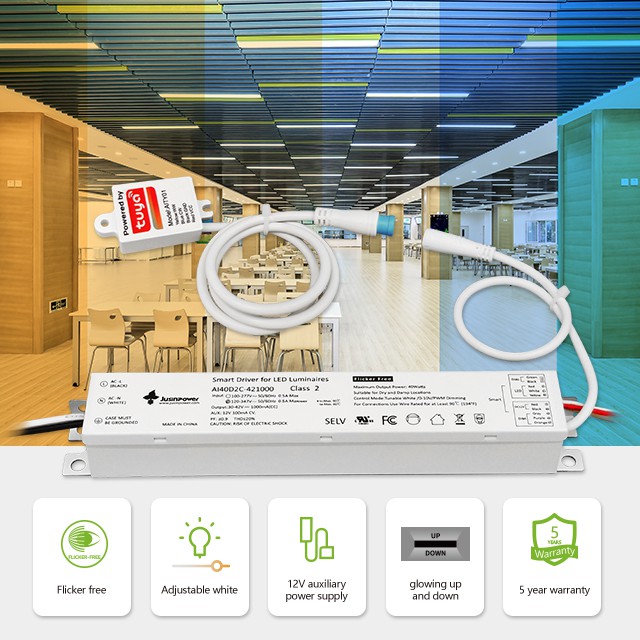
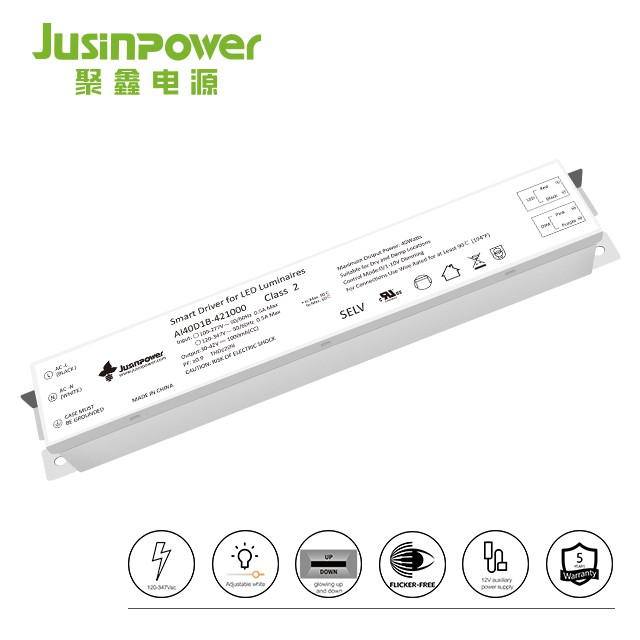
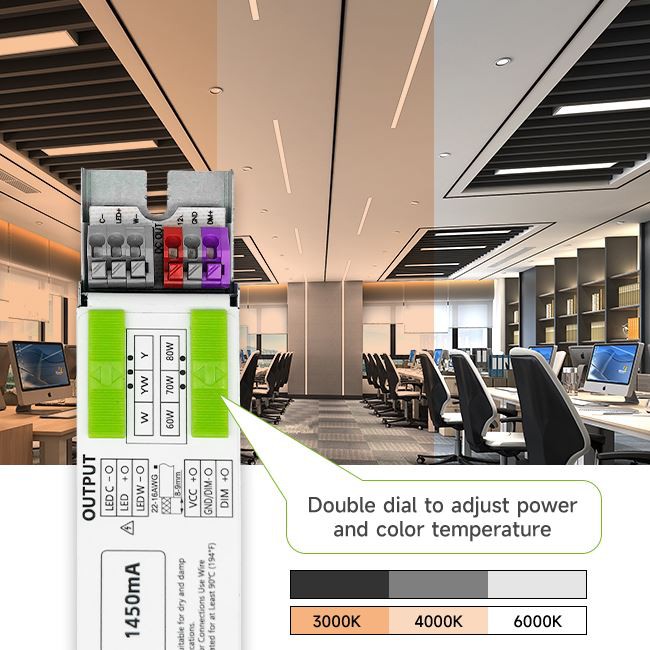
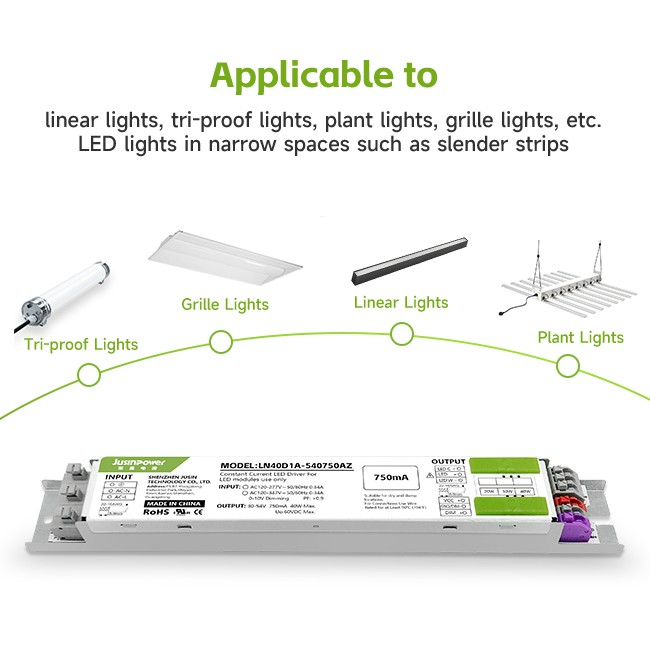
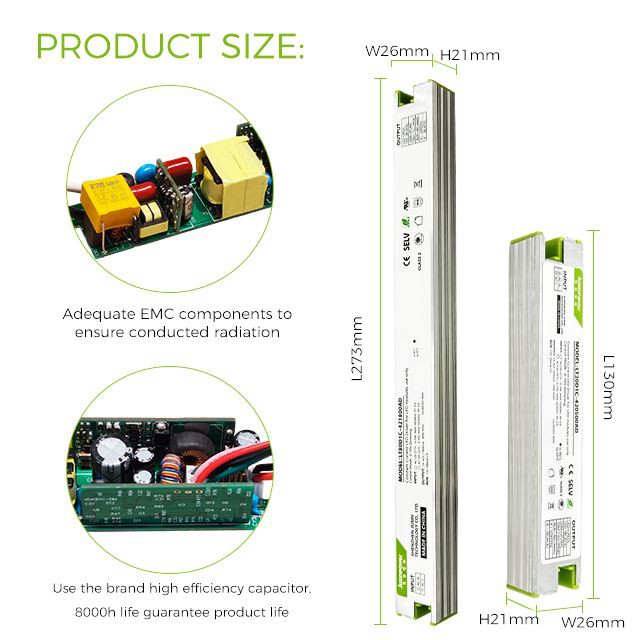
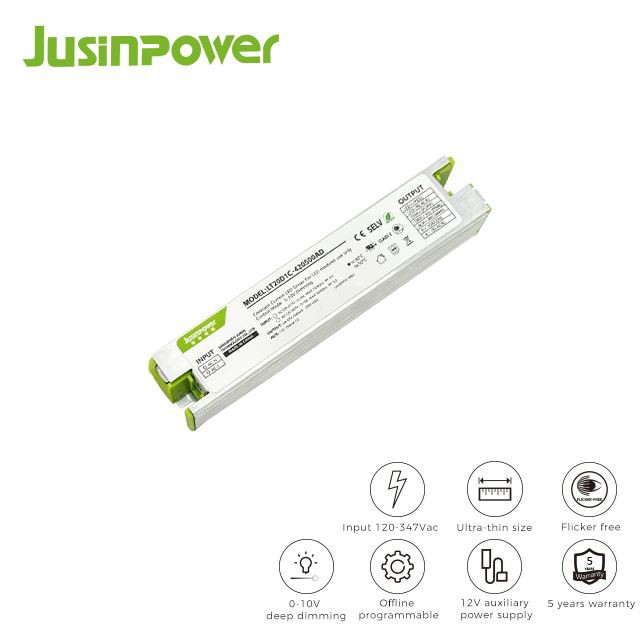
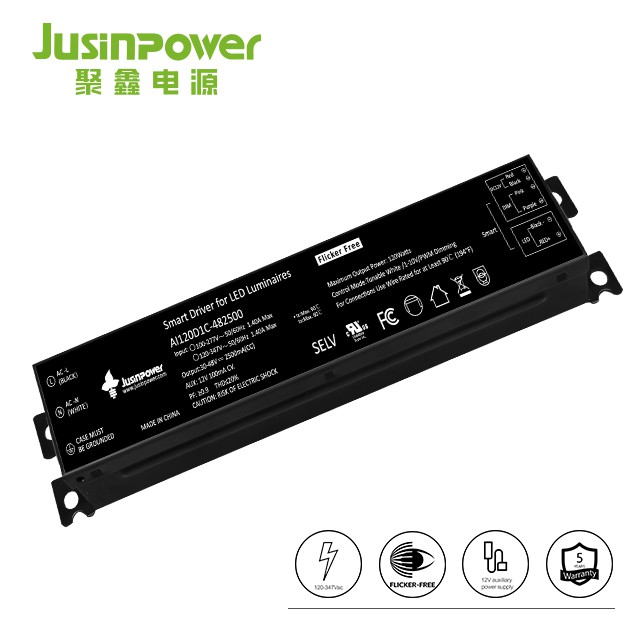
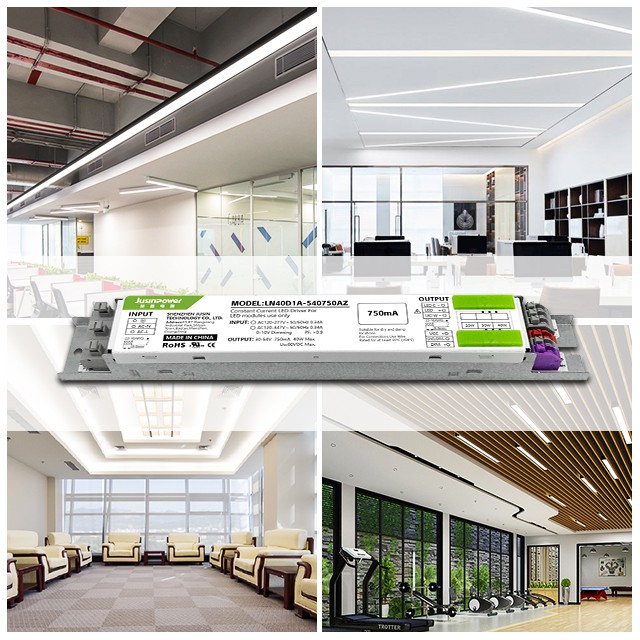
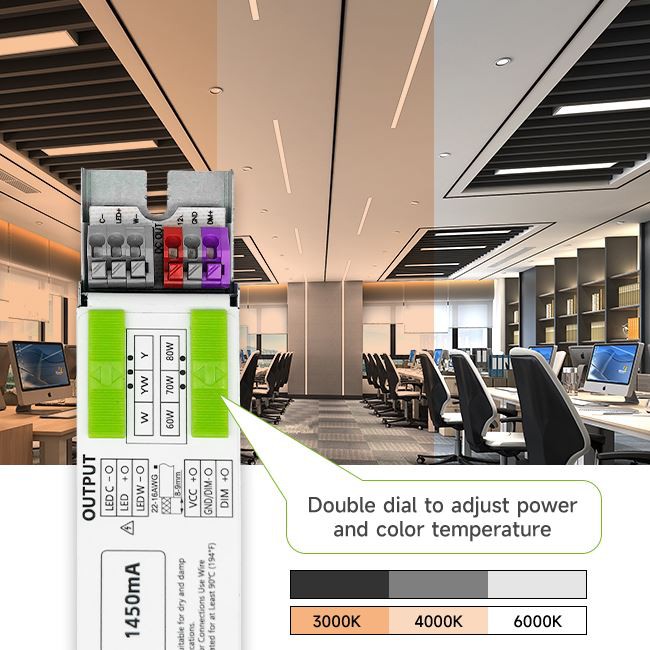
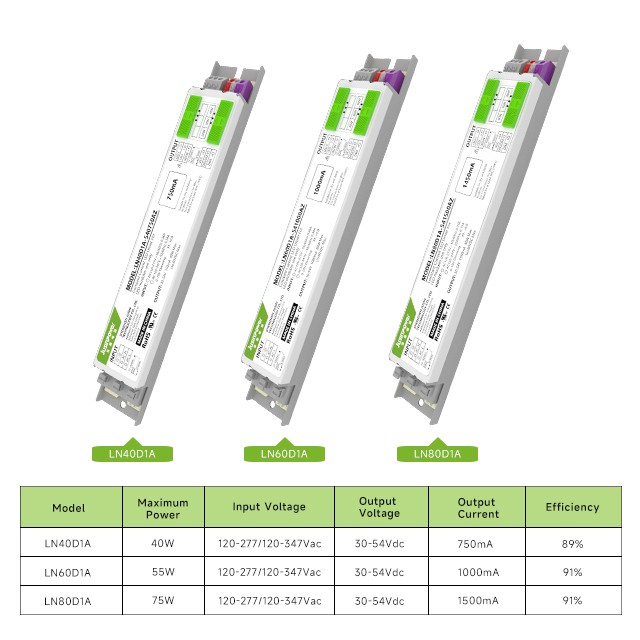
A dimmable LED driver is a special device that manages the power supply to LED lights, enabling them to adjust their brightness. Unlike their non-dimmable driver, only powers the lights. These drivers can dim the light in a range of different light intensities. That can offer flexibility and comfort in lighting design, and make them more creative. Dimmable LED drivers usually have a dedicated dimming circuit built into them. There is either a dedicated set of terminals or wires on the dimmable LED driver, which the dimming controller should be connected to.
Benefits of Dimmable LED Driver
Energy Savings
One of the main benefits of LED dimmers is energy savings. By reducing the brightness, you can lower energy consumption and, in turn, your electric bill. LEDs are already energy efficient, but dimming gives you additional control over energy consumption.
Customize Lighting
LED dimmers offer the ability to customize lighting. You can increase or decrease the brightness as needed. This allows for more flexibility in creating the ambiance of the room and creates a pleasant atmosphere.
Longer Life of LED Lights
Dimming LEDs can also extend the life of LED lights. Reducing the brightness reduces the amount of heat generated, which results in less stress on the LEDs. This allows the LEDs to last longer and saves you the cost of replacing bulbs in the long run.
Enhance Ambiance
A LED dimmer allows you to control the amount of light you need. A bright light is best when working or performing tasks when you're active, while a less intense light helps you to relax.
Efficiency Unleashed
LED driver dimmers contribute significantly to energy efficiency by enabling users to adjust the brightness levels based on their needs. This not only reduces energy consumption but also extends the lifespan of the LEDs.
Adaptable Ambiance
The real magic happens when LED drivers and dimmers join forces to create adaptable environments. From intimate settings to productive work spaces, users can effortlessly tailor the lighting to suit their preferences, thanks to the dynamic range offered by dimmers.
Prolonged LED Lifespan
Running LEDs at full brightness continuously can lead to premature wear and tear. By incorporating dimmers into the system, users can gently illuminate spaces, resulting in a prolonged lifespan for LED fixtures and reduced maintenance costs.
Mood Elevation
The impact of lighting on mood is undeniable. LED driver dimmers empower users to craft specific moods and atmospheres, fostering comfort, relaxation, or heightened productivity with a simple adjustment of the dimmer switch.
Integration with Smart Systems
In an era of applications smart homes and automated living, LED driver dimmers seamlessly integrate into various control systems. This compatibility allows for centralized control, timers, and even synchronization with other smart home devices.
Types of Dimmable LED Drivers
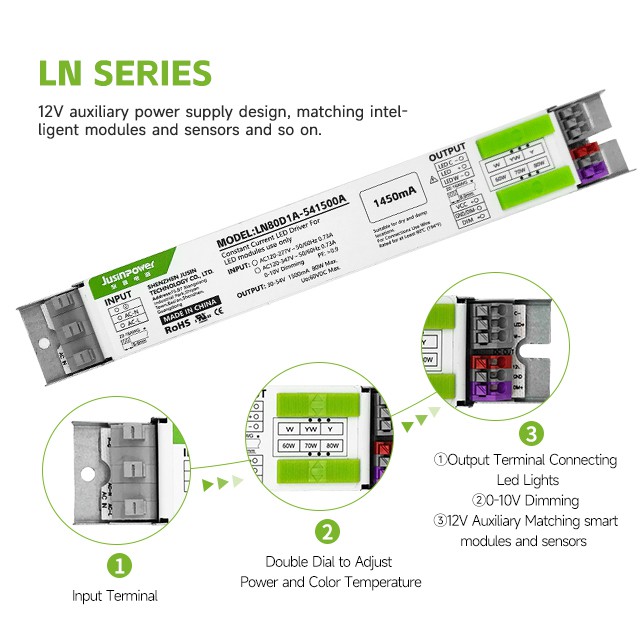
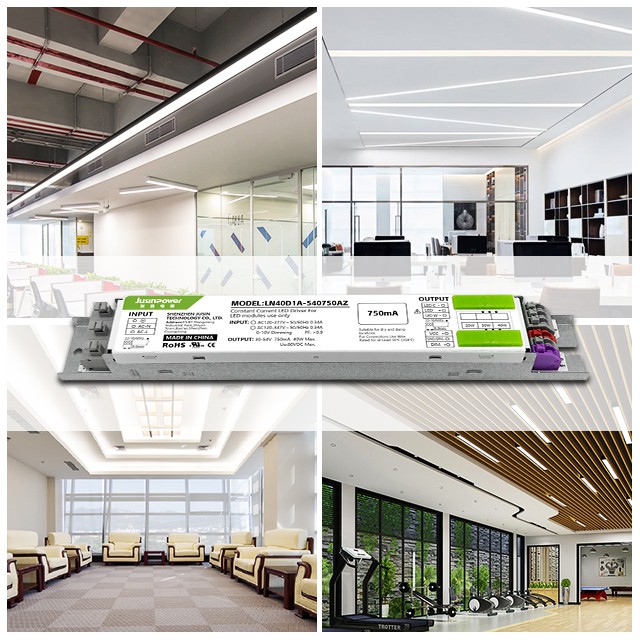
According to the Drive Mode
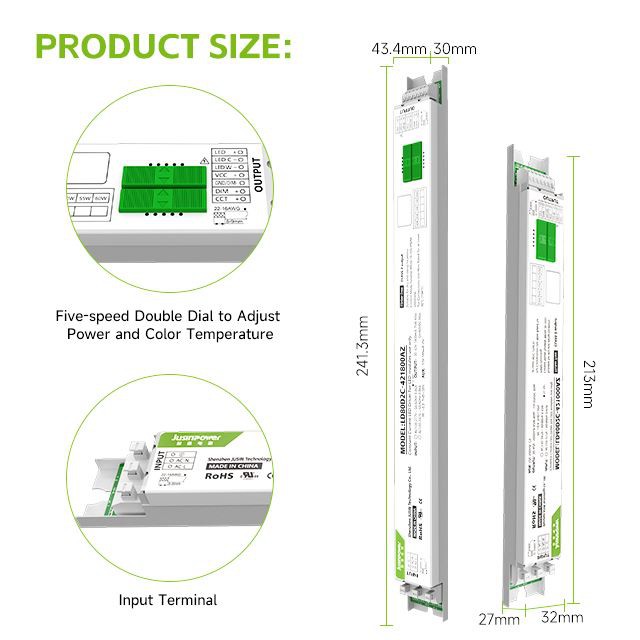
Constant Current LED Driver
The output current remains constant, but the output DC voltage varies within a specific range based on the load resistance. Lower load resistance leads to lower output voltage, while higher load resistance results in higher output voltage. Allows for load short circuits, but complete load disconnection is not permissible. Ideal for driving LEDs with a constant current, albeit relatively expensive. Attention should be given to the maximum current and voltage limits, which determine the number of LEDs that can be used.
Regulated LED Driver
The output voltage is fixed once the parameters in the voltage regulator circuit are determined, but the output current changes according to the load. Permits load disconnection, but complete short-circuiting of the load is strictly prohibited. Uses a voltage-stabilizing LED driving circuit to power the LEDs, requiring a suitable resistor to achieve uniform brightness across each LED string. Voltage fluctuations from rectification can affect the brightness.
According to the Circuit Structure
Capacitor Step-down Method
Using capacitors to reduce voltage, this method poses risks to the LED chip due to high instantaneous current during charging and discharging. It is sensitive to fluctuations in grid voltage, resulting in low efficiency and reliability.
Resistor Step-down Method
This method is heavily influenced by changes in grid voltage and cannot provide a regulated power supply. The step-down resistor consumes a significant amount of energy, resulting in low efficiency and system reliability.
Conventional Transformer Step-down Method
These power supplies are small, heavy, and inefficient, typically achieving only 45% to 60% efficiency. They are considered unreliable and are rarely used.
Electronic Transformer Step-down Method
This method offers low power supply efficiency and a limited voltage range (typically 180-240V), resulting in significant ripple interference.
RCC Step-down Switching Power Supply
With a relatively wide voltage regulation range and higher efficiency (typically 70% to 80%), this method finds wide application. However, due to the control method's discontinuous oscillation frequency, the switching frequency is challenging to control. It exhibits a larger load voltage ripple coefficient and poor adaptability to abnormal loads.
PWM Control Mode Switching Power Supply
A PWM LED driver comprises four main components: input rectification filtering, output rectification filtering, PWM voltage stabilization control, and switching energy conversion. The working principle involves closed-loop feedback through the control circuit, adjusting the pulse width of the main circuit switching device based on differences between the control LED signal and reference signal. This ensures stable output voltage or current, making it an efficient and reliable power supply option. The PWM switching power supply achieves high efficiency (typically 80% to 90%) with stable output voltage and current. It often incorporates comprehensive protection measures, making it a highly reliable choice.
According to the Installation Location
External Power Supply
An external power supply is install LED separately from the LED device. It is typically used for circuits with higher voltages that pose potential safety risks to humans. The external power supply is enclosed in a protective shell, and it is commonly used in applications such as street lights.
Built-in Power Supply
In contrast, a built-in power supply is integrated into the LED device itself. It operates at lower voltages, typically ranging from 12V to 24V, and does not pose any safety hazards to individuals. This type of driver is commonly found in bulb lights.
Mains Dimming
This is the most common type of dimming in homes and is the one most people will be familiar with. Mains dimmers are usually rotary. These are what you would find on a wall in place of a light switch. They have a dial you can twist left or right to decrease or increase the light intensity and push in to switch the light off.
Leading Edge
The leading edge is so named because it switches off the main signal at the beginning of the wave. It does this for each positive and negative cycle so it is switched off and on 100 times every second. It is the cheapest, relatively simple, and widely available technology but a drawback is that it often causes buzzing. The switching from zero to the peak of the wave is enough to cause vibrations in the electronic components as a surge of electrons moves each time. If the vibration is strong enough, the dimmer, and sometimes the lamp, will buzz.
Trailing-Edge
Trailing-Edge is a more advanced technology designed to combat buzzing. It works in the same way as the leading edge, by switching off the signal twice every wave, but it switches off at the end of each cycle. Trailing-edge dimming causes less buzzing because each time the wave is switched on, the wave is at the lowest strength of the cycle and gradually grows bigger.
Low Voltage Dimming
Low voltage dimming is a possibility when using external drivers. Not all external drivers will be compatible with low-voltage dimming methods. However, if you opt for LED control led by an external driver, the option of choosing a low-voltage dimmable driver is open to you. In low-voltage dimming, all the dimmer is doing is telling the drivers what to do. This is different from mains dimming because with mains dimming the dimmer itself reduces the power and sends it through the driver.
Pulse Width Modulation (PWM)
Pulse width modulation works on the same principle as main dimming. It switches the lamp on and off several times a second to reduce the total amount of light produced. As low-voltage dimming has the driver do the work, pulse width modulation does not have to chop up a main signal. The driver can switch the direct current it produces on and off to dim. A great advantage of PWM is that color rendering is the same at all light levels from dimmest to full brightness.
Isolated Driver Vs Non-Isolated Dimmable LED Driver
Isolated Driver
It refers to the electrical connection between the input and output through a transformer, the transformer is used to reduce the high-voltage voltage to a lower voltage and rectify it to a DC output. There is no direct connection between the primary coil and the secondary coil, so there is no danger of electric shock. In the power supply topology, there are mainly various flybacks with isolation transformers, forward excitation, half-bridge, LLC, etc.
Non-isolated Driver
The input power is directly applied to the load after step-down, and the input and output are directly connected through electronic components. The input and working voltage are not isolated. When in contact with the human body, it is prone to electric shock hazards. In the power topology, non-isolated power supplies mainly include Buck, Boost, Buck-Boost, and so on.
Volume
Non-isolated drivers are generally small in size. To reduce transformers, the minimum material design framework is used to achieve the same product functions.
Price
The price of an isolated driver is higher than that of a non-isolated driver. Due to the lack of transformers and lower cost prices, non-isolated power supplies are mainly used in more economical types of lamps, widely acceptable in areas where they pay attention to cost. The cost of isolated drive power is high, but its stability and safety are high, which are very popular in the high-end market.
Parameters
Non-isolated LED drivers have a large power range and a wide voltage range, while isolated LED drivers have a small power range and a much narrower voltage range.
Stability
The non-isolated LED driver is worse than the isolated power supply. The reason is that the non-isolated circuit design is very sensitive to surges and shocks. The instability and instability of the state grid causes the LED chip to be overloaded and damaged. To solve this problem, a varistor is essential in the design of a non-isolated LED drive circuit. Compared with non-isolated power supplies, isolated LED drivers are safer due to the MOS protection in the circuit design.
Safety
Isolated the LED driver means that the input and output terminals are electrically connected through a transformer. The conversion process of the transformer is: electromagnetic-electricity, not grounded, so there is no danger of electric shock; a non-isolated driver in the power circuit is directly added to the LED load through the input and output through the electronic components, and there is a risk of electric shock.
Efficiency
Non-isolated LED Driver uses electronic equipment to lower the voltage. Due to the avoidance of transformer losses, the power efficiency of non-isolated LED drivers is higher than that of isolated LED drivers. The electrical efficiency of non-isolated LED drivers can reach 90%, while the efficiency of isolated power supplies using transformers is 86-88%.
How to Choose Dimmable LED Driver
1.Lifetime Rating
Check the lifetime rating of your LED light and driver. Opt for models with a guaranteed 50,000 hours of life expectancy. This is approximately six years of continued use.
2.Power
Make sure that the dimmable LED driver's power rating is more than or equal to the total wattage of LED lights connected to it.
Dimming Range
Some dimmers go all the way down to zero, while others until 10%. If you need your LED lights to completely go out, choose an LED dimmable driver that can go down to 1%.
Water Resistant
If you're purchasing LED dimmable drivers for the outdoors, make sure they have an IP64 water resistance rating.
Distortion
Choose an LED driver with a total harmonic distortion (THD) of about 20% because it creates less interference with LED lights.
Certifications
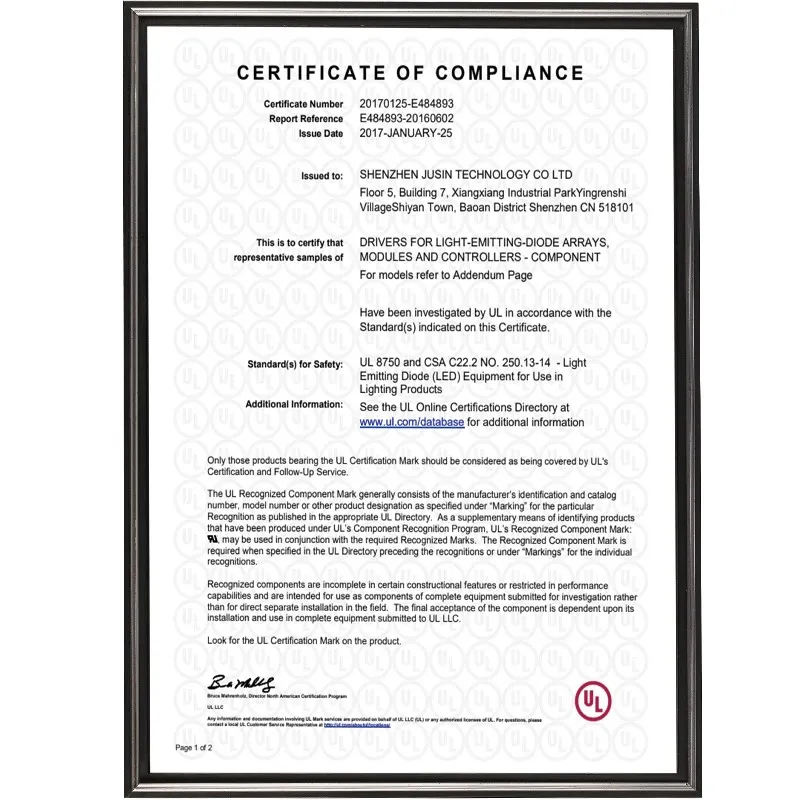
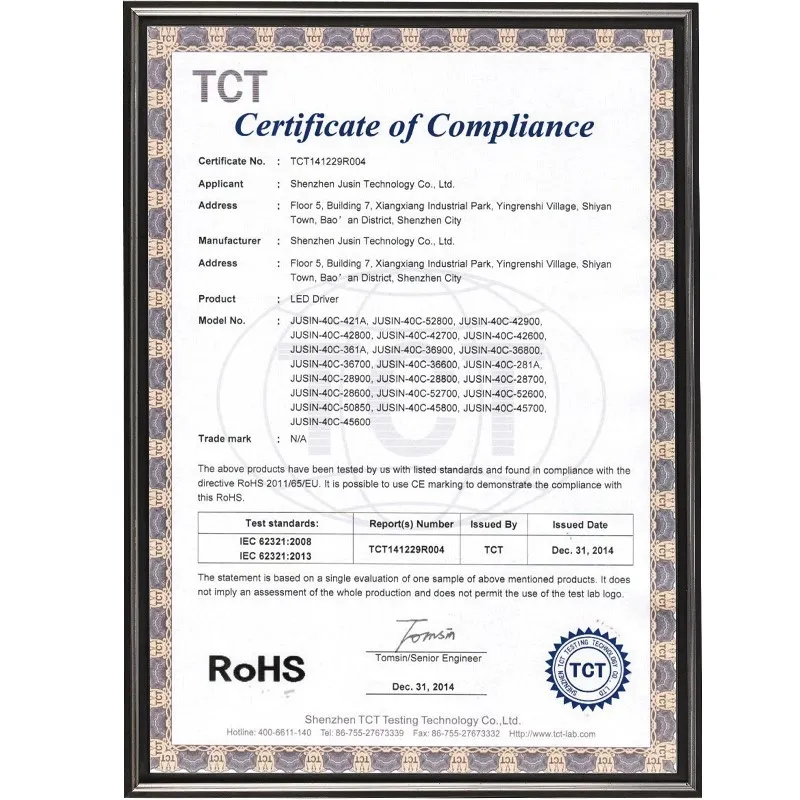
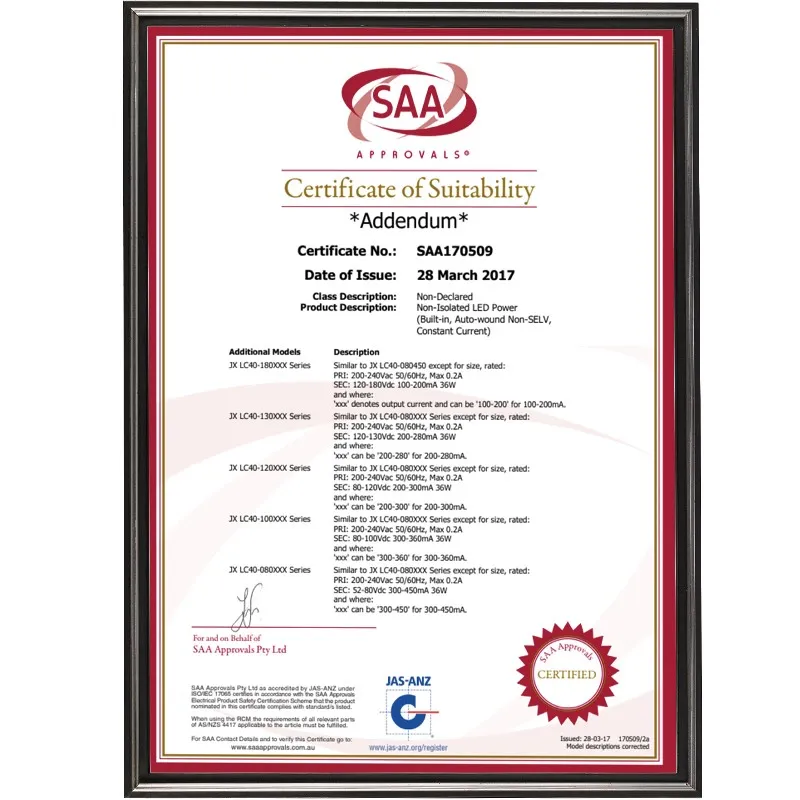
We are a LED drive manufacturer headquartered in Shenzhen city, China. We have set up a branch in Taiwan, and possess a 4000 square meters factory.
Frequently Asked Questions
As one of the most professional dimmable LED driver manufacturers and suppliers in China, we're featured by quality products and good service. Please rest assured to wholesale customized dimmable LED driver from our factory.
pwm dimming ac, 5 8G LED Sensor Driver, Non isolated Constant Current Sensor Driver